Title: Challenges with Existing Learning-for-OPF Neural Proxies, and how Constrained Learning can Help
Abstract
In this talk, we address the popular topic of neural surrogates for learning solutions to AC optimal power flow (OPF) problems. If the AC OPF solution mapping from loads to optimal solutions contains a discontinuity, or if a network is trained on purely locally optimal solutions (or in an unsupervised/self-supervised manner), a strictly positive lower bound on the approximation error of the neural network exists. We illustrate this issue on small networks and introduce the concept of constrained learning for AC OPF to help diagnose and understand whether or not the source of model error is arising from a lack of model capacity or from a fundamental property of the chosen network/problem. These results have implications for the ability of neural surrogates for grid optimization problems to achieve high-quality predictions at all possible grid states.
Bio
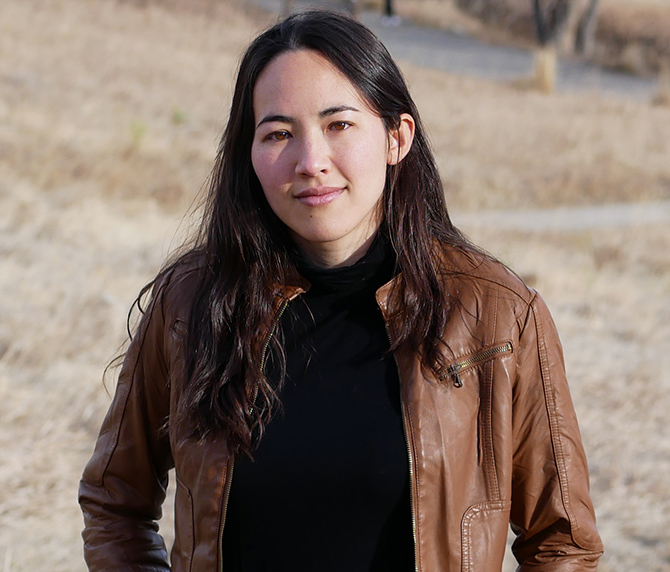
Dr. Kyri Baker received her B.S., M.S., and Ph.D. in Electrical and Computer Engineering from Carnegie Mellon University in 2009, 2010, and 2014, respectively. From 2015 to 2017, she worked at the National Renewable Energy Laboratory. Since Fall 2017, she has been an Assistant Professor at the University of Colorado Boulder and is now an Associate Professor and a Fellow of the Renewable and Sustainable Energy Institute (RASEI). She is also a Research Scientist at Google DeepMind. She combats climate change by developing computational tools that leverage optimization and machine learning to operate energy systems more efficiently and reliably. Dr. Baker has received a National Science Foundation CAREER award for her work combining power system operations with machine learning, and has led an award-winning team in the Department of Energy ARPA-E Grid Optimization competition.