Title: Enhancing EV and PV Observability via Sparse Decoding
Abstract
Rapid adoption of electric vehicles (EVs) and distributed photovoltaic (PV) systems introduces substantial uncertainty into distribution-grid monitoring and operation. Because these resources are often located behind the meter or observed only through aggregated measurements, system operators may have limited visibility into their individual behaviors. This seminar presents a sparse-decoding framework for improving EV and PV observability by exploiting the inherent structure of their power profiles. PV systems in geographically similar locations share common solar-generation patterns. EV charging curves, meanwhile, exhibit distinct piecewise and event-driven characteristics. By learning these structured semantics, the proposed approach can estimate, separate, and reconstruct otherwise unobserved EV charging and PV generation. The talk will introduce the underlying representation learning and sparse recovery formulations, and discuss identifiability and robustness under limited or noisy measurements. More broadly, this work illustrates how structural priors can turn sparse, noisy measurements into actionable visibility for increasingly decentralized power systems.
Bio
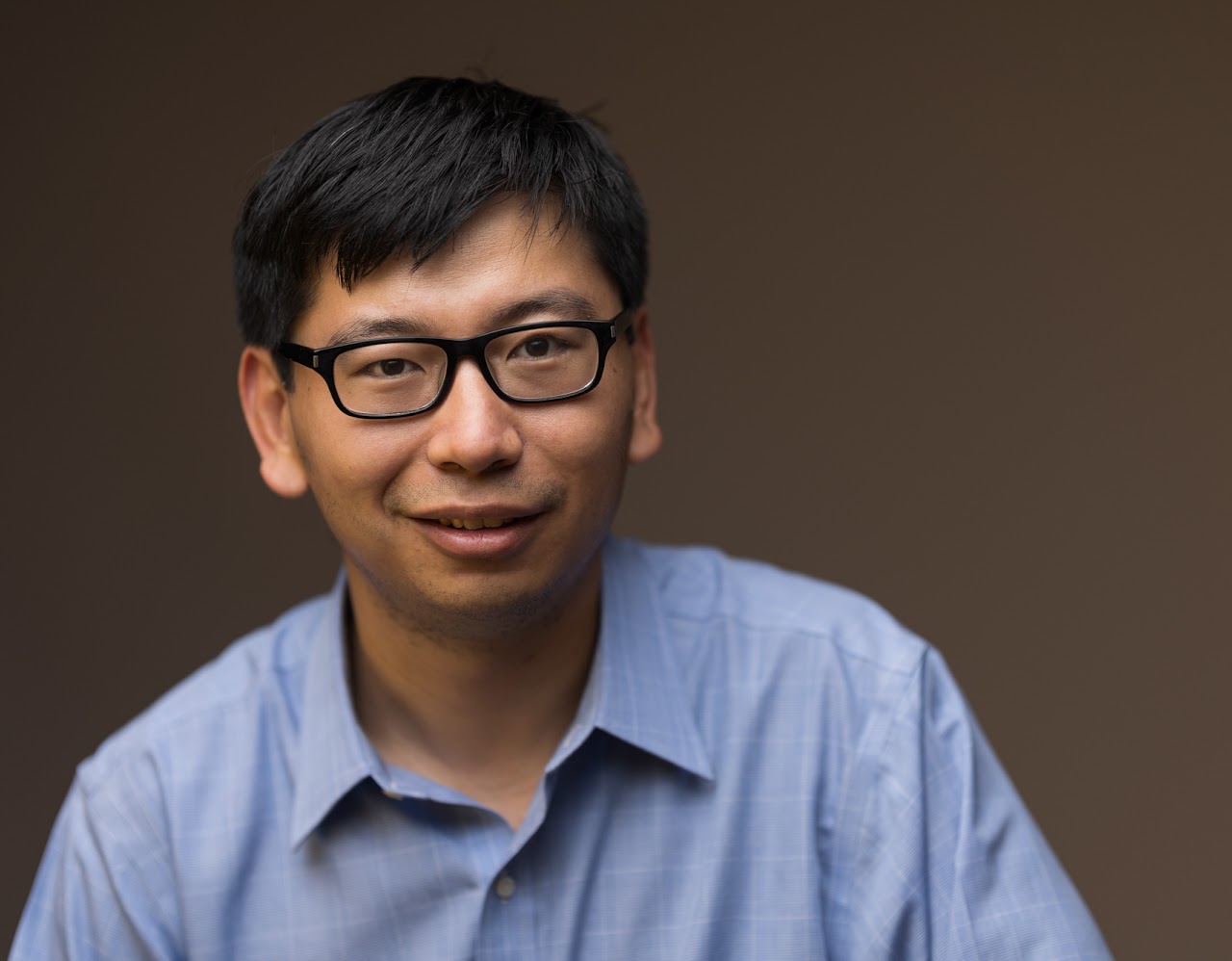
Yize Chen is an assistant professor with ECE Department at the University of Alberta. He got his Ph.D. degree in Electrical and Computer Engineering from University of Washington in 2021; and his undergraduate degree from Chu Kochen College at Zhejiang University in 2016. He was a postdoctoral researcher at Lawrence Berkeley National Lab. He has also held multiple research positions at ISO New England, Microsoft Research, Los Alamos National Laboratory, and Harvard Medical School. Yize’s research focuses on the intersection between control, optimization and machine learning, and he is interested in designing cyber-physical systems, especially power systems with performance guarantees. He is also a recipient of several best paper and prize paper awards at IEEE PES General Meeting (2024, 2022), Power Systems Computation Conference (PSCC) (2020), and ACM e-Energy (2019).